Professional Presence
Career & Professional Development | Students | Professional Presence
Engage with Us
Your professional presence is how you represent yourself in the professional world, both online and in person. It’s about conveying your skills, character, and competence to potential employers and colleagues. A strong presence can open doors and make a lasting impression.
Profile Basics
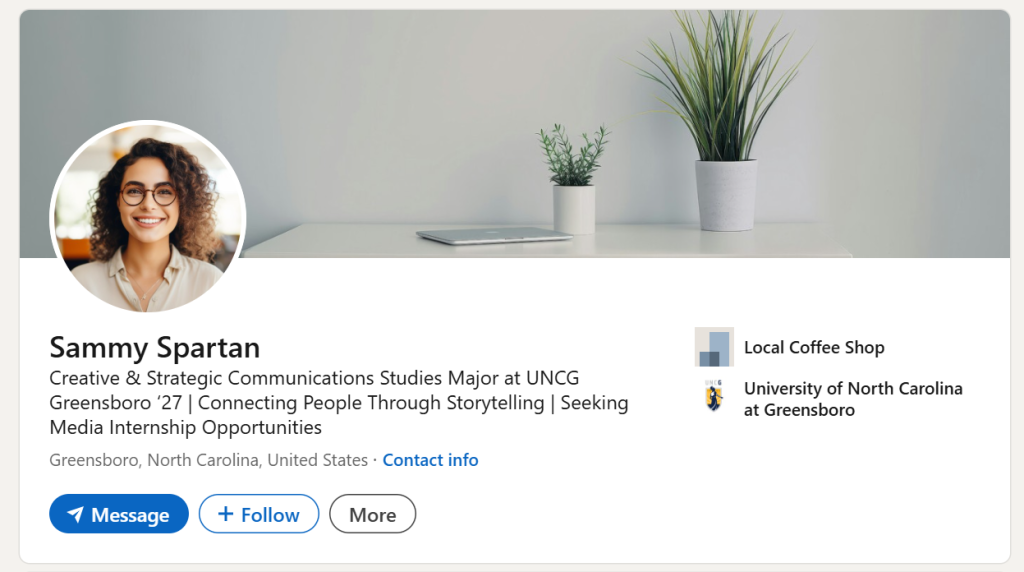
- Photo: Upload a recent, professional-looking photo. Profiles with a picture are 21 times more likely to be viewed.
- Need a professional photo? Our photo booth is available at no cost to UNCG students. Learn more
- Headline: Edit your headline to attract readers and show what you’re pursuing. Go beyond “Student at UNCG” by adding your major, skills, and career interests.
- Example: Marketing Student | Social Media Intern | Passionate About Brand Storytelling
- Background Photo: Personalize your header image with something that represents you and your professional interests.
Summary (About Section):
- Think of this as your introduction. Write in the first person about who you are, your skills, and your experience.
- Include industry keywords, as they are used in LinkedIn’s search.
- Profiles with a summary receive up to 3.9 times as many views.
Experience Section:
- Include all of your positions, including paid and unpaid jobs, extracurricular activities, and athletics.
- Describe what you did using bullet points or a short paragraph. You can copy this from your resume.
- Use action verbs and numbers to quantify the impact of your work when possible.
Education Section:
- Include your major, minor, or study abroad experiences.
- Consider including GPA (if higher than 3.0) and relevant coursework.
Skills Section:
- List at least 5 skills. This can get you up to 17x more profile views.
- Include keywords that recruiters in your field would search for.
See It in Action: Example Profile
Want to see what a strong student profile looks like?
Professional Attire
What it includes:
- Matching suit (jacket + pants/skirt) in neutral colors like black, navy, or gray
- Collared shirt or blouse (pressed and tucked in)
- Closed-toe dress shoes
- Minimal accessories and subtle grooming
When to wear it:
- Job and internship interviews
- Career fairs (especially when you’re job-seeking)
- Employer-hosted events (information sessions, office visits)
- Graduate or professional school interviews
- Presentations or competitions
What it includes:
- Dress pants, khakis, or skirt
- Button-up shirt, blouse, or modest top
- Sweater or cardigan (optional)
- Dress shoes or flats (no sneakers or sandals)
When to wear it:
- Networking events or panels
- Employer meet-and-greets
- Class presentations
- On-campus job interviews or orientation sessions
What it includes:
- Clean, well-fitting jeans or casual pants
- Simple top, polo, or sweater
- Clean sneakers or casual shoes
- No ripped clothing, graphic tees, or athletic wear
When it’s okay:
- Informal mentor meetups
- Peer networking events

Pro Tip:
When in doubt, dress one step more formal than you think you need to. It’s easier to remove a blazer than to wish you had one.